Loading...
Serving Sunnyvale, CA and surrounding areas. (669) 215-2682
Sagging wire, shifting posts, and deer getting into your garden are fixable problems. We install farm and ranch fencing in Sunnyvale built to handle clay soil, local wildlife pressure, and years of wet winters and dry summers.
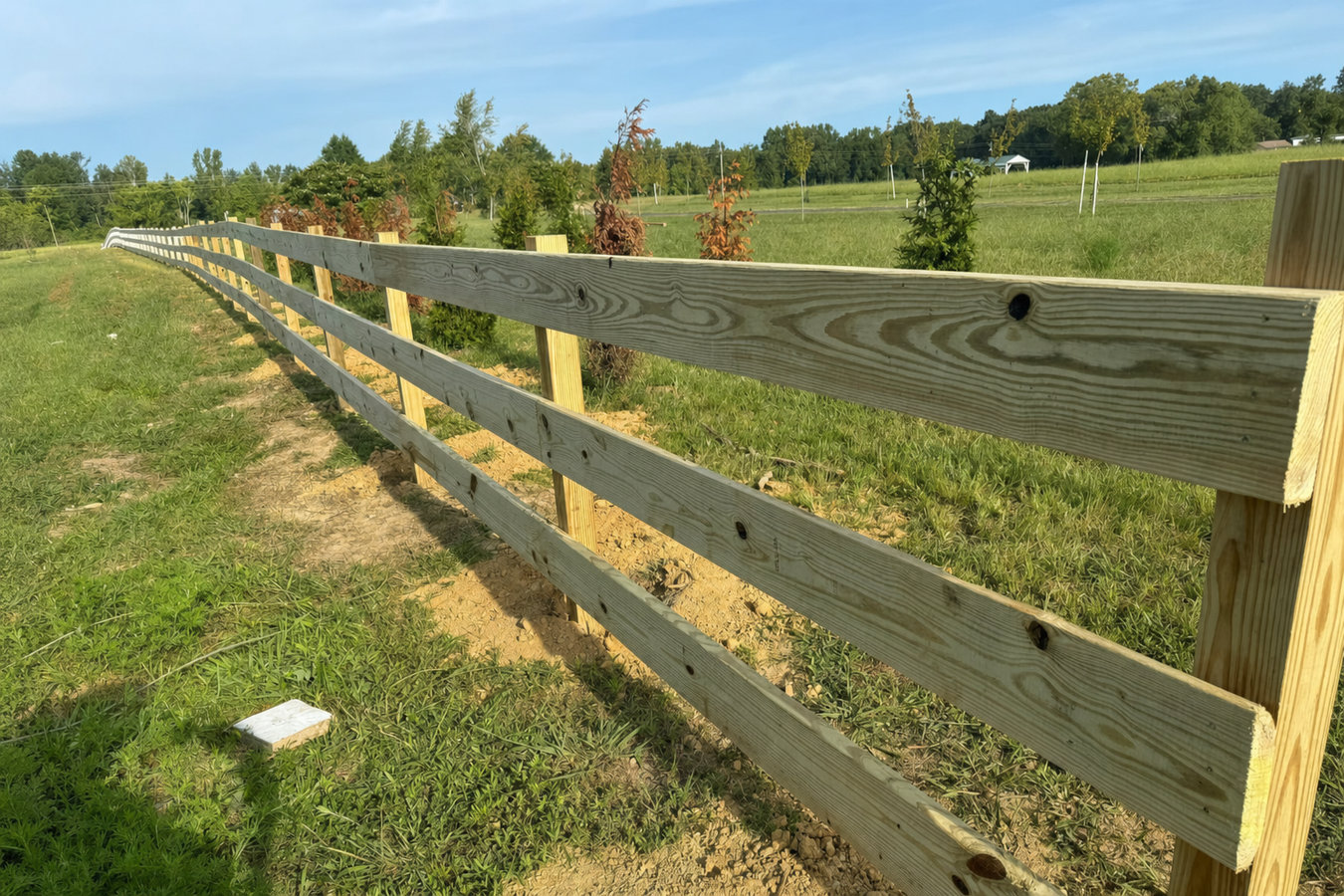
Farm and ranch fencing in Sunnyvale covers large-scale perimeter and interior fencing for livestock containment, garden protection, property boundary definition, and wildlife exclusion - most residential-scale installations are completed in one to three days once any required permits are in place.
Unlike a standard backyard fence, farm fencing is built to cover longer runs of land and withstand sustained pressure from animals, weather, and time. Common styles include wood post-and-rail, woven wire, high-tensile wire, and welded pipe or tube steel - each suited to different animals and property types. Sunnyvale sits at the edge of residential and semi-rural zoning, so the right material and layout depends on what you are fencing and which county or city rules apply to your specific parcel. For homeowners who want a contained and secure yard for dogs alongside a larger agricultural perimeter, our pet and dog fencing service handles purpose-built enclosures sized for specific animals.
The single biggest factor in how long any farm fence lasts is how well the posts are set. Santa Clara Valley clay soil expands when wet and shrinks when dry, and posts that are not set deep enough or backfilled correctly will begin to shift within a few years regardless of how good the materials are. A well-built fence on properly set posts can last 20 to 40 years. Budget one to two weeks for the full project timeline if no permit is required, or a few extra weeks if the city or county needs to review plans before work begins.
If you can push a post and feel it move, or the wood at ground level looks dark, soft, or crumbly, the post is failing. In Sunnyvale wet-dry climate cycle, base rot is one of the most common reasons farm fences need full replacement rather than repair. A fence that looks fine from a distance can be structurally compromised at the posts.
If livestock or pets are escaping, or if deer are getting into your garden or pasture, your fence is no longer doing its job. This is especially common on the semi-rural edges of Sunnyvale and the surrounding Santa Clara Valley, where deer pressure on gardens is a real and recurring problem. A fence that worked five years ago may no longer be adequate if animal pressure has changed.
If you are adding chickens, goats, horses, or a large vegetable garden to a property that was not previously set up for it, you likely need fencing that did not exist before. Many Sunnyvale-area homeowners who purchase semi-rural parcels find that existing fencing is not suitable for the animals or uses they have in mind. Starting with a proper installation is almost always less expensive than retrofitting later.
If areas of your fence collect water during Sunnyvale rainy season, those sections are aging faster than the rest. Standing water accelerates post rot and can undermine the soil around post bases, causing leaning and eventual failure. If certain fence sections always look worse after winter, those areas need attention before the problem spreads.
Unsure whether your fence needs repair or a full replacement? Call us and we will walk your fence line with you and give you a straight answer.
The right fence for your property depends on what you are containing, what you are keeping out, and how the land is shaped. Wood post-and-rail fencing suits hobby farms and horse properties where appearance matters alongside function - it looks at home in the landscape and is easy to maintain in sections. Woven wire is the workhorse choice for mixed livestock, covering ground efficiently and holding up well to animal pressure. High-tensile wire works on larger acreage where cost per foot matters and the terrain is relatively consistent. Welded pipe and tube steel is the most durable option for properties with heavy equipment passing through or large animals testing the fence regularly. All of these options pair well with our wood fence installation service for the residential sections of a property.
Gates get as much attention as fence panels during our planning process. A gate that is too wide, too heavy for its posts, or hung on posts not set deep enough will sag within a few years. We plan for gates at every point where you, your animals, or your equipment will need regular access - and we size them correctly for what will pass through them. For homeowners who also need a safety barrier around a pool on the same property, our pool fence installation service handles that portion of the project alongside the agricultural perimeter.
For homeowners who need a secure run or yard enclosure specifically sized and built for dogs or small pets, rather than a full agricultural perimeter.
Post-and-rail and board-on-board wood fences for properties that want a traditional agricultural aesthetic with a finished residential look.
If your property includes a pool alongside agricultural use, our pool fence service handles the safety barrier with full permit coordination.
When existing farm fencing just needs targeted work - new posts in failed sections, re-tensioned wire, or repaired gates - without a full replacement.
Sunnyvale sits at an unusual edge - a dense Silicon Valley city that borders semi-rural parcels where agricultural and residential zoning rules overlap. Permit requirements, setback rules, and material restrictions can differ significantly from one parcel to the next depending on the zone. Parts of the area near the foothills also fall within fire hazard severity zones where certain fence materials - particularly untreated wood placed close to structures - may be restricted. Homeowners in Saratoga and Los Altos with semi-rural parcels face the same set of questions - and getting clear answers before any post goes in the ground is what separates a smooth project from a costly one.
The Bay Area Mediterranean climate creates a specific challenge for wood fencing: months of dry heat followed by a rainy season that brings significant moisture. Wood posts that dry out and then absorb rain repeatedly are prone to cracking, warping, and rot at the base. Sunnyvale clay-heavy soils compound this - the seasonal expansion and contraction of the ground gradually shifts posts that were not set with enough depth and the right backfill. These are not abstract concerns; they are the main reasons farm fences in this area fail faster than the same fence would in a more stable climate.
When you reach out, we will ask about how much ground needs to be fenced, what you are trying to contain or keep out, and whether there is existing fencing to remove. This helps us arrive at the site visit prepared rather than starting from scratch.
We walk your property to measure the fence line, assess the terrain, and identify any complications - slopes, rocky ground, drainage issues, or soft soil. After the visit, we provide a written estimate that separates materials from labor. We respond within one business day of any request.
Depending on your property zoning and fence type, a permit may be required before work begins. We handle permit research and, in most cases, can pull the permit on your behalf. California law also requires underground utility lines to be marked before any digging starts - we coordinate this through the state service.
The crew sets posts, installs rails or wire, and hangs gates. Most residential-scale farm fence projects in the Sunnyvale area wrap up in one to three days. Before we leave, we walk the full fence line with you and address anything that does not look right.
We walk the fence line with you in person before quoting. No phone estimates, no surprise charges.
(669) 215-2682The clay-heavy soil throughout this area expands and contracts with the seasons. We set posts to a depth and footing specification that accounts for local soil movement - not just the minimum standard - which is what keeps a fence straight through years of wet winters and dry summers. UC Agriculture and Natural Resources documents post-setting best practices for California soil conditions.
Sunnyvale sits at the edge of residential and agricultural zoning, and the permit rules genuinely differ by parcel type. We confirm what applies to your specific address before quoting, so you are not hit with a stop-work order after the posts are already in the ground.
Deer and other wildlife in the Santa Clara Valley are a real design factor for anyone fencing a garden or small farm near open space. We build enclosures that account for the specific animals and pressures on your property - not a one-size fence that works for a backyard but fails against a determined deer.
Farm fence jobs vary too much for reliable phone quotes. We give you a written, itemized estimate after seeing your land in person - so the number you agree to is the number on the final invoice. No surprise charges after the posts go in.
Farm fencing jobs in the Sunnyvale area require a contractor who understands local soil, local zoning, and local wildlife pressure - not just one who can set posts in a straight line. Those details are what separate a fence that holds up for 20 years from one that needs attention every other season.
For secure pet enclosures and dog runs built to contain specific animals, sized and configured for your yard rather than a full agricultural perimeter.
Learn MoreTraditional post-and-rail and board-on-board wood fences for properties that want a finished residential look alongside agricultural function.
Learn MoreSpring is the best time to get posts in the ground before summer heat sets in - reach out now to lock in your estimate and installation date.